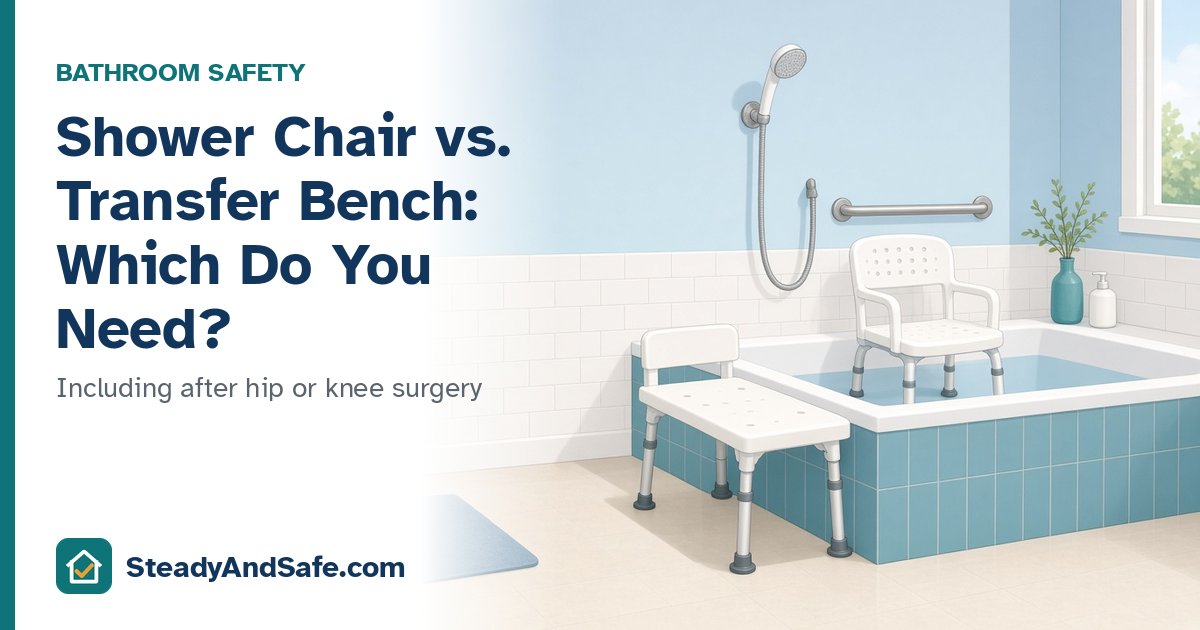
If you're shopping for a shower seat, you're probably doing it for a reason: a hip replacement on the calendar, a parent who just had a scare in the tub, or knees that don't like stepping over that tub wall anymore. The good news is that the choice usually comes down to one question. This guide walks through it, using guidance from hospitals, the CDC, and orthopedic surgeons, so you can pick the right seat the first time.
The quick answer
- Choose a tub transfer bench if stepping over the side of the tub is hard, scary, or not allowed after surgery. You sit down outside the tub and slide across, so you never have to stand on one leg.
- Choose a shower chair if you can step into the tub or a walk-in shower safely, but you get tired, dizzy, or unsteady standing for a whole shower.
- After hip replacement, many hospital therapy guides teach a seated transfer on a bench. Your surgeon's team has the final say, so ask them before you buy.
Falls in the bathroom aren't a small worry. According to the CDC, more than one in four adults age 65 and older falls each year, and falling once doubles the chance of falling again. A seat won't prevent every fall, but the right one takes the riskiest move, standing on wet surfaces, out of your routine.
What's the difference?
Shower chair (or bath seat)
A shower chair sits entirely inside the tub or shower. Most have four rubber-tipped legs that adjust in height, and some add a backrest and armrests. A shower stool is the same idea without a back.
The catch: you still have to step over the tub wall to reach it. In a walk-in shower with no lip, or a very low curb, that may be no problem. In a standard tub, it means balancing on one leg on a wet surface, which is the exact move many people are trying to avoid.

Tub transfer bench
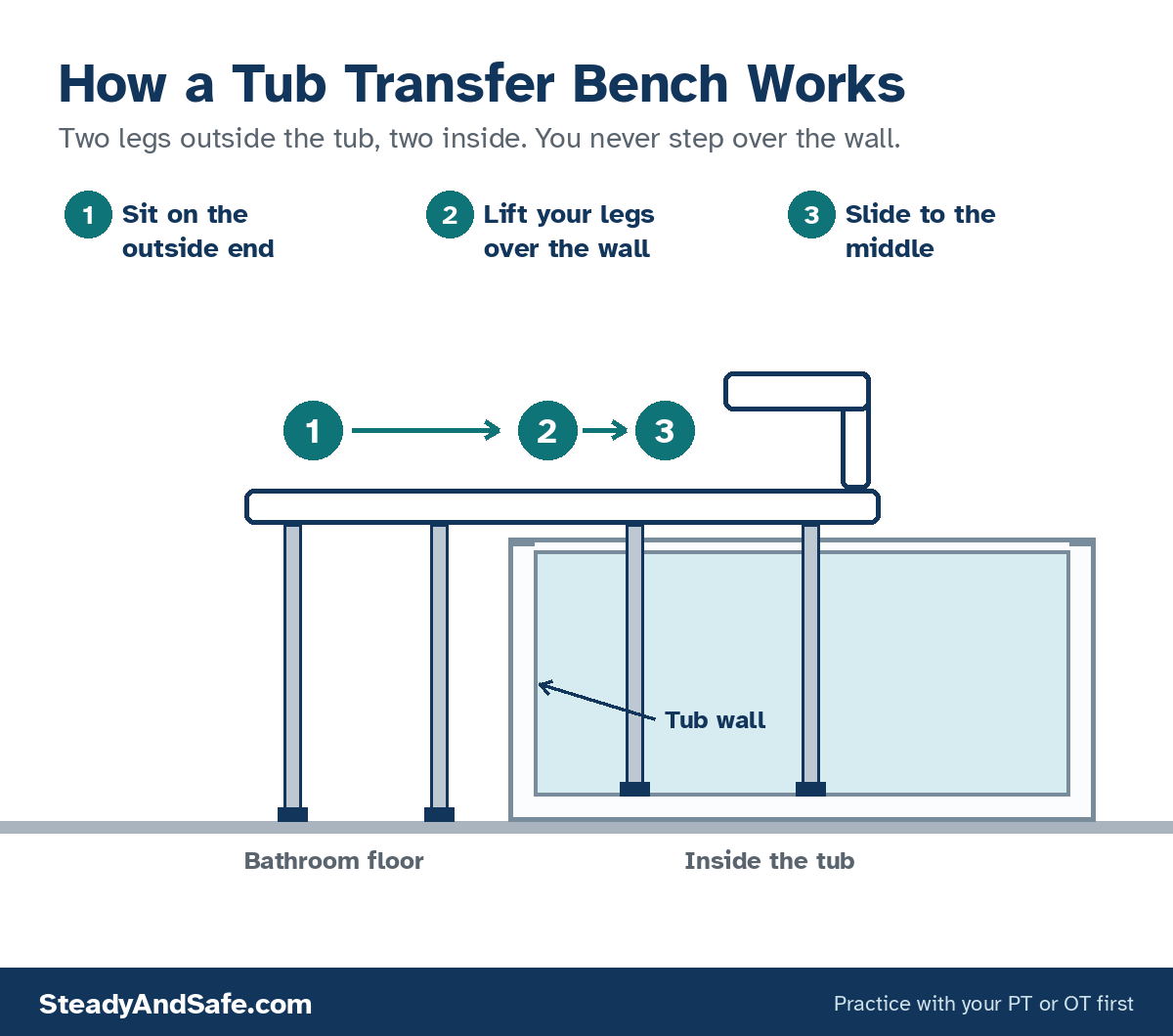
A transfer bench is longer. Two legs stand inside the tub and two stand on the bathroom floor, so the seat straddles the tub wall. You sit on the outside end like you'd sit on a chair, lift your legs over the wall one at a time, and slide to the middle. Many benches have a backrest that can be switched to either side for left- or right-facing tubs.
Sliding and swivel benches
Some benches have a seat that glides along a rail or swivels, so you don't have to scoot across the surface yourself. These can help caregivers or anyone whose skin is fragile, but they're usually bigger and cost more. Measure carefully before choosing one.
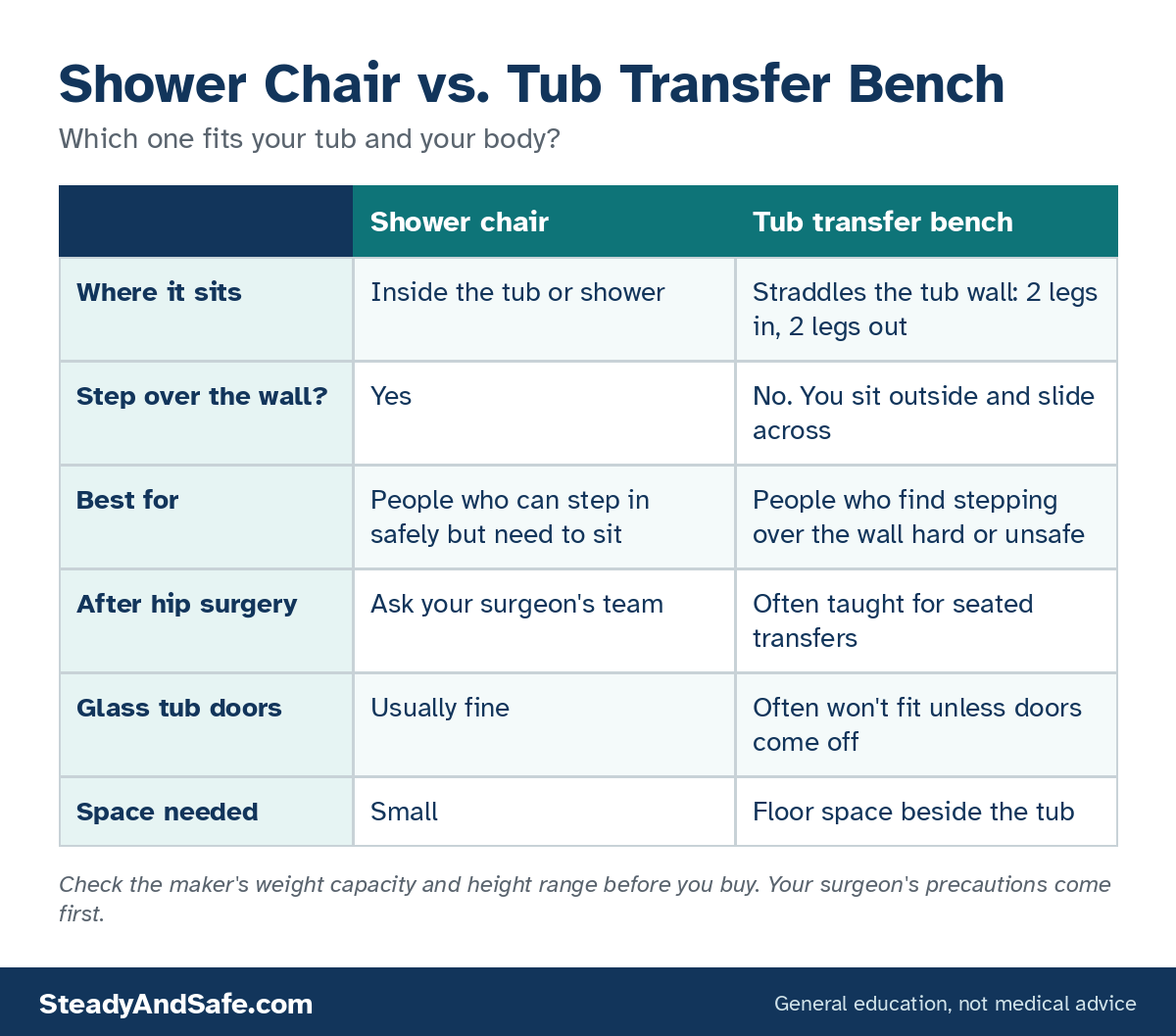
| Shower chair | Tub transfer bench | |
|---|---|---|
| Where it sits | Inside the tub or shower | Straddles the tub wall |
| Step over the wall? | Yes | No, you sit and slide |
| Best for | People who can step in safely but need to sit | People who find stepping over the wall hard or unsafe |
| After hip surgery | Ask your surgeon's team | Often taught for seated transfers |
| Glass tub doors | Usually fine | Often won't fit without removing doors |
| Space needed | Small | Needs floor space beside the tub |
Which one fits your situation?
An older adult with balance or leg weakness
If getting over the tub wall feels shaky, a transfer bench removes the single-leg step completely. If balance is fine but standing is tiring, a chair with a backrest and arms gives support and something to push up from. Either way, pair the seat with a drilled grab bar and a handheld shower (more on that below).
A caregiver helping a parent
A bench lets your parent sit down while you're beside them on dry floor, instead of you leaning into a wet tub. A backrest and arms make the seat feel more secure. If you're helping with every shower, ask your parent's doctor for an OT referral. MedlinePlus suggests asking a provider for a referral so a therapist can check the bathroom and teach safe transfers.
After hip replacement
This is where the choice matters most. See the next section, and my list of what you need at home after hip or knee replacement.
After knee replacement
The goal is limiting deep knee bending while you heal. A seat set higher helps, and so does a transfer bench if stepping over the tub wall is hard on a new knee. MedlinePlus recommends getting your home ready before knee or hip surgery, including a shower chair and a raised toilet seat.
After back surgery
Many spine surgery guides tell you to avoid bending, lifting, and twisting while you heal, and to keep the incision dry until you're cleared. A seat means you aren't bending to wash your legs and feet. Add a long-handled sponge and a handheld shower so you can wash without twisting.

After hip replacement: follow your precautions
Many people come home from hip replacement with movement rules called hip precautions. Exact rules depend on your surgeon and the surgical approach, but common ones, as described by the VA's Veterans Health Library, include:
- Don't bend your hip past 90 degrees.
- Don't cross your legs.
- Don't turn your operated leg inward.
Stepping over a tub wall can break all three at once. That's why therapy teams often teach a seated transfer. Northwestern Medicine's guide to bathtub transfers after hip replacement walks through using a tub bench or seat set high enough that your knees stay lower than your hips.
The American Academy of Orthopaedic Surgeons (AAOS) also covers everyday activities after hip replacement, and its guide to getting ready for joint replacement lists a shower chair, grab bars, and a raised toilet seat among the things to have in place.
Practice before surgery. If you can, set up the bench and practice the transfer while you're still mobile, with a helper nearby. Your hospital's pre-surgery class or your PT can check your technique.
Important: Your surgeon's precautions come first. If they differ from anything here, follow theirs.
After knee or back surgery
- Knee: set the seat high so your knee doesn't have to bend deeply when you sit and stand. Keep the operated leg straight in front of you as you lower down, if your therapist teaches it that way.
- Back: follow your surgeon's instructions about bending, lifting, and twisting. Northwestern Medicine's back care guide explains how to move safely during everyday tasks. Many spine surgery instructions also say not to soak in a tub until you're cleared, so ask your surgeon whether a seated shower is the plan instead of a bath.
Signs a transfer bench is the better fit
- Stepping over the tub wall looks unsafe, painful, or tiring. The Mayo Clinic Store's occupational therapist guide points to a transfer bench for exactly this.
- Your parent grabs the towel bar, sink, or shower door to climb in. Those aren't built to hold body weight.
- They have trouble lifting their legs high enough to clear the side of the tub (Memorial Sloan Kettering).
- They've started skipping baths or showers and say it's "too much trouble." That's worth a gentle conversation, and maybe a call to their doctor.
Measure before you buy
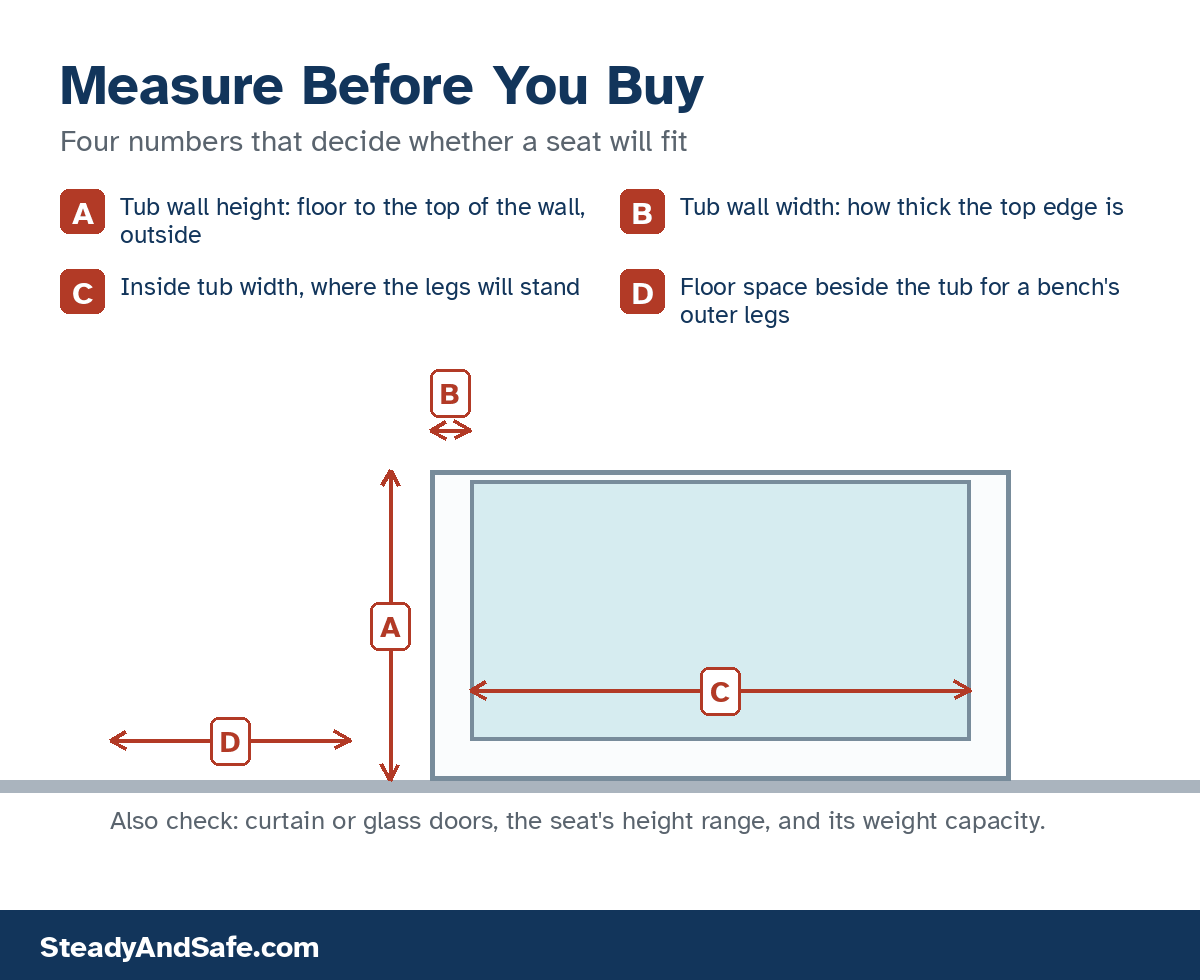
A seat that doesn't fit your tub is a seat that wobbles. Take these measurements first:
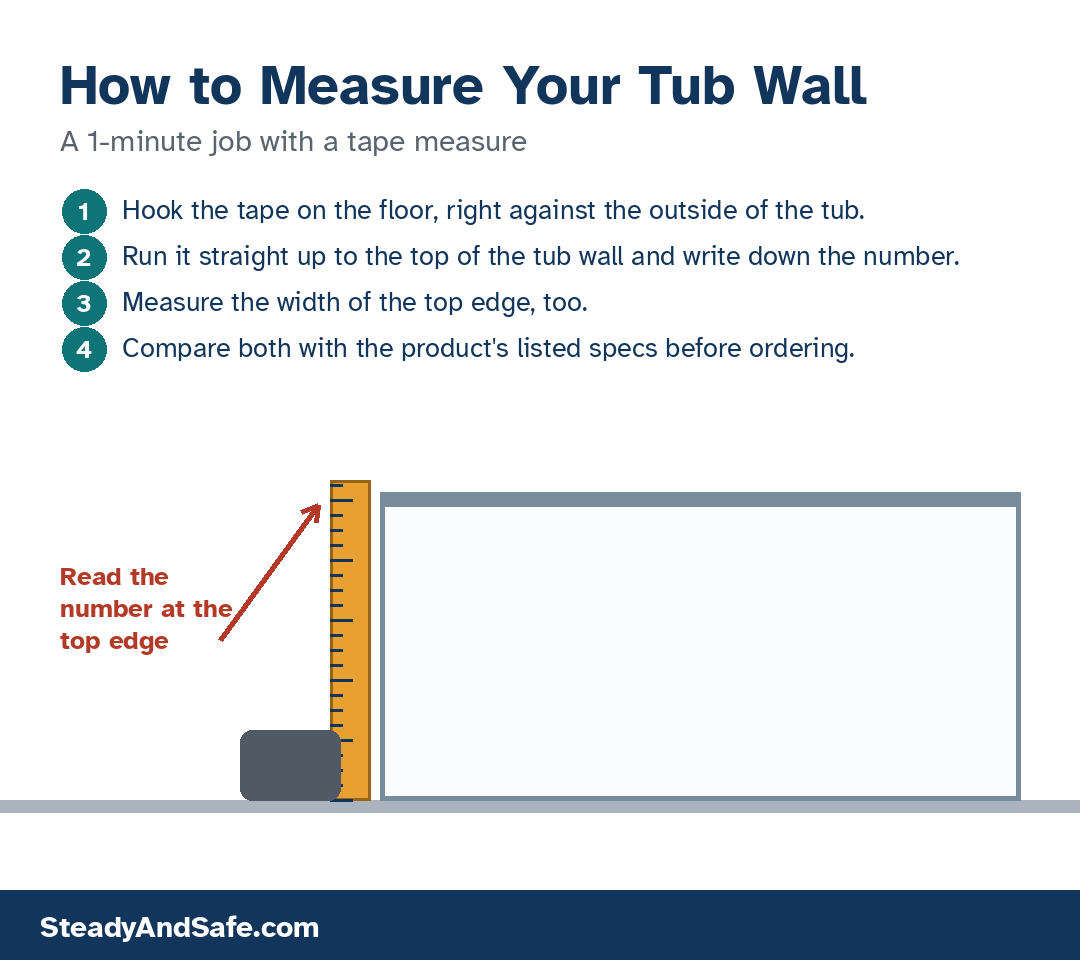
- Tub wall height (floor to top of the tub wall, outside).
- Tub wall width (how thick the top edge is).
- Inside tub width (wall to wall at the bottom, where the legs will stand).
- Floor space beside the tub (a bench needs room for its outer legs).
- Curtain or glass doors? Most benches need a curtain. Glass doors on a track usually have to come off.
- Seat height range on the product, compared with your height and any hip precautions.
- Weight capacity, with some margin.

Features worth paying for
- Adjustable legs with rubber tips that lock at each height.
- A backrest and arms for anyone with weakness or balance problems. Arms give you something to push up from.
- A curtain cutout or tuck slot on benches, so water stays in the tub.
- Drainage holes in the seat so water doesn't pool.
- Tool-free assembly if a caregiver will be setting it up.
- A clearly listed weight capacity from the maker.
Products to consider
These picks are based on each maker's published specs and the features above. I haven't used a shower chair, a transfer bench, or a tub rail myself, so these aren't hands-on reviews. Specs change, so confirm the weight capacity, height range, and fit on the product page before you buy.
Shower chairs
Carex Adjustable Bath and Shower Seat with Back. A chair with a backrest and side handles.
- Pros: listed weight capacity of 350 lb; seat height adjusts from 14 to 20 inches; built-in handles to push up from; a notch to hold a handheld shower; flared aluminum legs; assembles without tools.
- Cons: you still step over the tub wall to use it; check that the height range suits your precautions if you are tall.
Medline Shower Chair with Back. A basic chair with a backrest from a large medical supplier.
- Pros: listed weight capacity of 350 lb; seat height adjusts from about 16 to 21 inches, a little higher than many chairs.
- Cons: no armrests on this version; like any chair, it doesn't solve stepping over the tub wall.
Tub transfer benches
Drive Medical Transfer Tub Bench (12011KD-1). A plastic bench with a backrest and arm.
- Pros: listed weight capacity of 400 lb; height adjusts from 17.5 to 22.5 inches in half-inch steps; tool-free assembly; reversible for left- or right-facing tubs; limited lifetime warranty.
- Cons: like all benches, it needs floor space beside the tub and usually a shower curtain instead of glass doors.
Vive Tub Transfer Bench. An aluminum-frame bench with a textured seat.
- Pros: listed weight capacity of 400 lb; reversible back and armrest; suction-cup feet on the legs inside the tub and rubber caps outside; drainage holes in the seat; height adjusts from 18.5 to 23.5 inches.
- Cons: its lowest setting is higher than some benches, so measure your tub wall first; needs a curtain, not glass doors.
Clamp-on tub rails
Drive Medical Clamp-On Tub Rail. Clamps to the tub wall for an extra handhold.
- Pros: listed weight capacity of 300 lb; fits tub walls 3 to 7 inches wide; height adjusts from 14.5 to 17 inches; tool-free install.
- Cons: a clamp-on rail is a steadying aid, not a replacement for a grab bar mounted in the wall; recheck the clamp often.
Carex Bathtub Rail with Chrome Finish.
- Pros: steel clamps with rubber pads; fits tub walls about 3.5 to 6 inches wide.
- Cons: lower listed weight capacity (200 lb) than the Drive rail; won't fit fiberglass tubs with thin or rounded walls if they're outside the listed range.
The safety setup that goes with it
A seat is one piece. These make it work:
- A handheld shower so you can wash while seated. Two to compare: the Moen Eco-Performance Handheld Shower with 30-inch Slide Bar (a 69-inch hose and a slide bar for setting the height; Moen notes the slide bar is not a grab bar) and the Vive Handheld Shower Head (a 6.5-foot hose, five spray settings, and a pause button).
- A non-slip mat or strips in the tub, and a non-slip rug outside. See Non-Slip Bath Mats and Tub Strips.
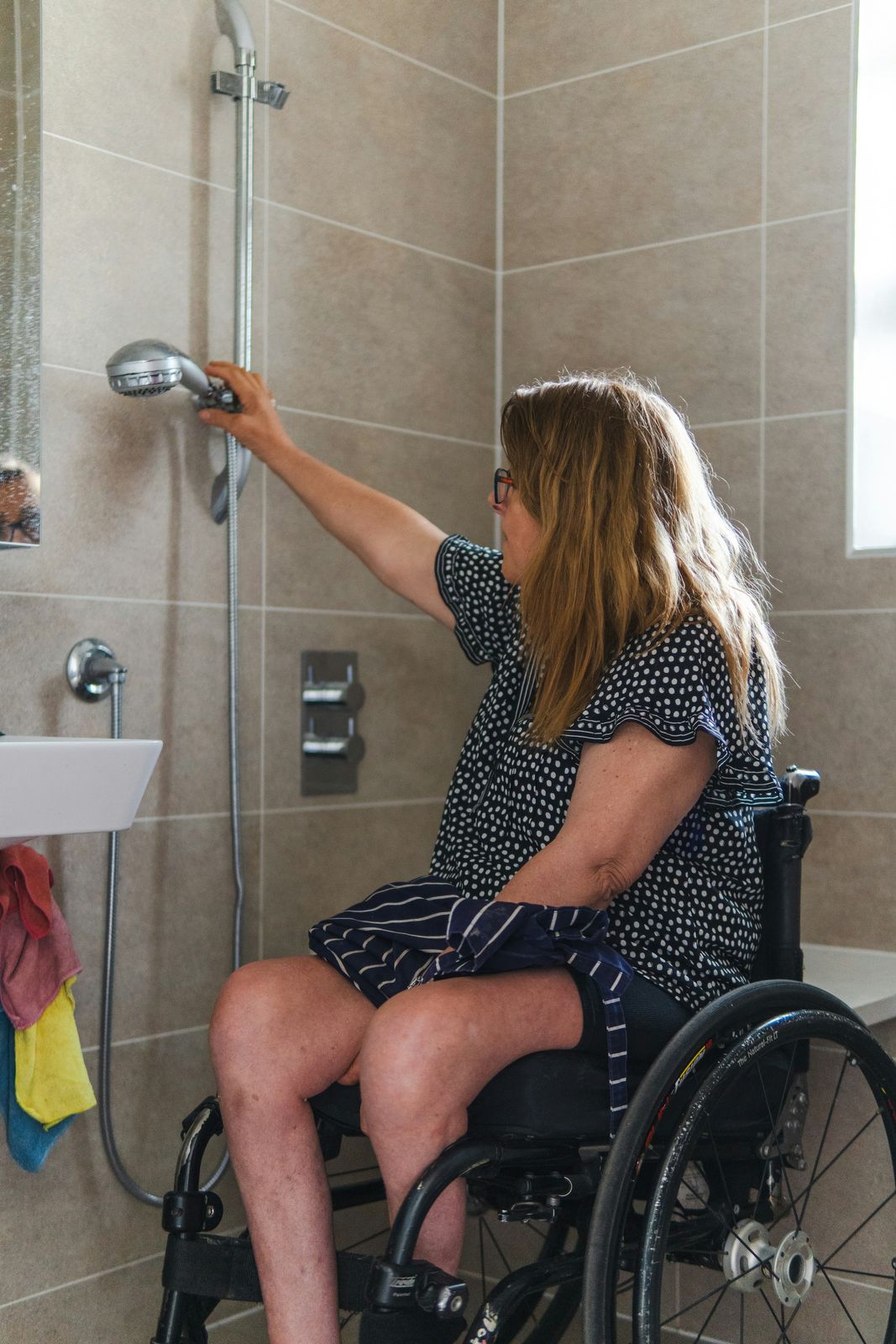
- A drilled grab bar where you sit and stand. Never use a towel bar or soap dish as a handhold. See Are No-Drill Grab Bars Safe?.
- A long-handled sponge so you don't bend to reach your feet. Some hip and knee kits, like the Vive Hip and Knee Recovery Bundle, include one.
- A helper for the first few transfers, especially right after surgery.

When to ask a PT or OT
An occupational therapist can watch how your parent actually moves in their bathroom and recommend the right seat, grab bar spots, and routines. The Mayo Clinic Store's OT guide suggests a home safety assessment if your parent has fallen, feels unsteady, uses a cane or walker, has had a stroke or surgery, has trouble stepping into the tub, or needs help bathing.
Does insurance or Medicare pay?
Usually not under Original Medicare. Medicare's national coverage list for durable medical equipment denies bathtub seats as "comfort or convenience" items, and it denies grab bars and raised toilet seats, too (CMS NCD 280.1). Some Medicare Advantage plans include over-the-counter or supplemental benefits that may help. AARP explains what Medicare does and doesn't cover for home safety equipment. Call your plan to check, and ask your hospital whether it has a loan closet.
The bottom line
If the tub wall is the problem, get a bench. If standing for the whole shower is the problem, get a chair. And if surgery is coming, ask your team which they want you to use, set it up before you go in, and practice once with someone nearby. For the toilet, read Raised Toilet Seat vs. Toilet Safety Frame. For a whole-home walk-through, use the room-by-room home safety checklist.
Questions people ask
Is a tub transfer bench better than a shower chair?
Not always. A bench is better if stepping over the tub wall is hard or not allowed. A chair is simpler and smaller if you can step in safely.
What do I need to shower after hip replacement?
Most guides list a tub transfer bench or shower seat, a handheld shower, a long-handled sponge, non-slip mats, and grab bars. Your surgeon's team may have its own list.
How do I get in and out of the bathtub after hip replacement?
Hospital therapy guides usually teach a seated transfer: sit on the bench outside the tub, then lift your legs over while keeping your hip precautions. Practice with your PT or OT first.
How high should a shower chair be after hip replacement?
High enough that your knees stay lower than your hips when you sit, according to Northwestern Medicine's guide. Your therapist can set the right height for you.
Will a transfer bench fit with glass shower doors?
Often not. Most benches need the doors removed and a curtain put up instead. Measure first.
Do we still need grab bars if Mom uses a shower seat?
Usually, yes. The seat helps while bathing, but grab bars help with stepping in, turning, sitting down, and standing up. They should be anchored into studs or reinforced blocking, not held on by suction cups.
Does Medicare cover shower chairs?
Original Medicare usually doesn't. Some Medicare Advantage plans may help, so call yours.
Read next
Sources
- CDC older adult falls
- CDC fall prevention
- MedlinePlus bathroom safety
- Mayo Clinic Store OT guide to bathroom falls
- Memorial Sloan Kettering shower and bathtub accessories
- MedlinePlus getting your home ready
- AAOS activities after hip replacement
- AAOS getting ready for joint replacement
- VA hip safety
- Northwestern Medicine bathtub transfers
- Northwestern Medicine back care
- AARP on Medicare
- CMS NCD 280.1
Product details come from each maker's product page, checked October 2026.